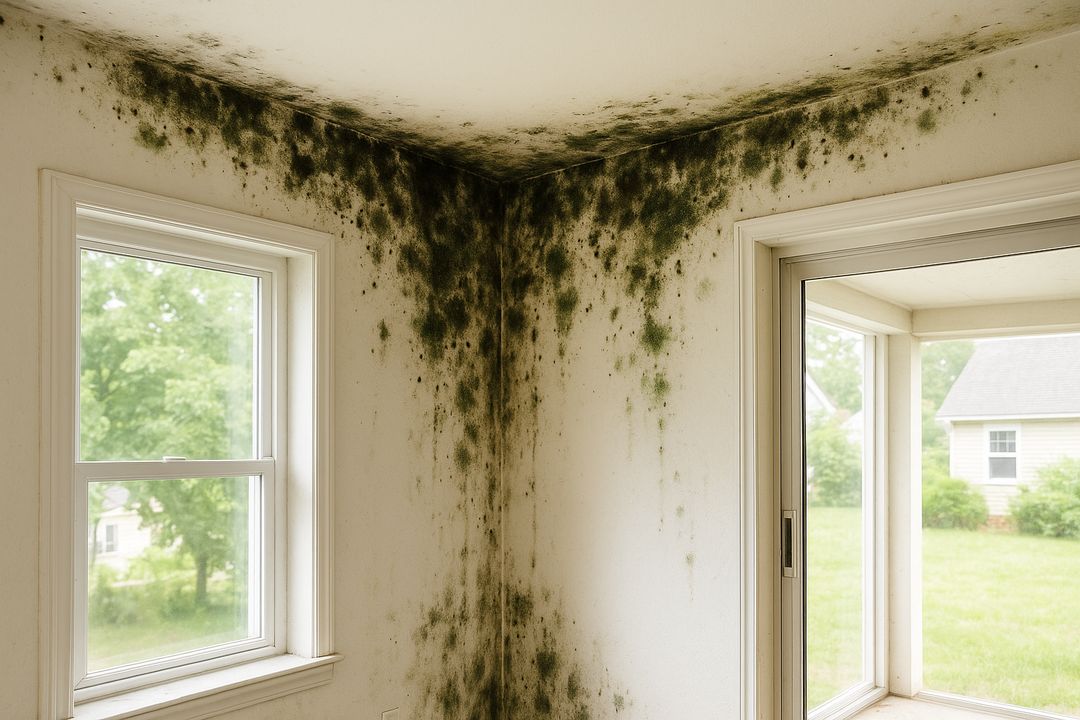
What Is Mold?
Mold is a type of fungus that thrives in moist environments. It reproduces by releasing microscopic spores into the air — spores that are invisible to the naked eye but can cause significant health problems and property damage. There are thousands of mold species, but the most common in Western Washington homes include Aspergillus, Penicillium, Cladosporium, and Stachybotrys chartarum (commonly called "black mold").
Mold needs just three things to grow: moisture, organic material (wood, drywall, carpet, paper), and time. Western Washington's climate provides abundant moisture, and most homes are built with materials mold loves. That's why mold remediation is one of our most requested services.
How Mold Problems Develop
- Water damage not dried properly — the most common cause. Even professionally cleaned water damage can lead to mold if drying is incomplete
- Chronic humidity — indoor humidity above 60% creates ideal mold conditions
- Poor ventilation — sealed, energy-efficient homes trap moisture inside
- Crawlspace moisture — ground moisture evaporating into an unventilated crawlspace
- Plumbing leaks — slow, hidden leaks behind walls or under floors
- Condensation — cold surfaces (windows, exterior walls) collect moisture from warm indoor air
- Roof leaks — water entering attics creates mold in areas homeowners rarely inspect
Health Risks of Mold Exposure
Mold exposure affects everyone differently, but common health effects include:
- Respiratory issues — coughing, wheezing, difficulty breathing, chest tightness
- Allergic reactions — sneezing, runny nose, itchy/watery eyes, skin rashes
- Asthma aggravation — mold is one of the top asthma triggers, especially in children
- Chronic sinusitis — persistent sinus infections linked to mold exposure
- Neurological symptoms — headaches, fatigue, difficulty concentrating (associated with certain toxic molds)
People with compromised immune systems, respiratory conditions, or allergies are particularly vulnerable. If household members are experiencing unexplained respiratory symptoms that improve when they leave the home, mold should be investigated.
Our Mold Remediation Process
1. Professional Mold Testing
We begin with comprehensive testing — air quality sampling, surface sampling, and moisture mapping — to identify the type of mold, the extent of contamination, and the moisture source feeding it. Testing is performed by certified mold inspectors using accredited laboratory analysis.
2. Containment
Before any mold is disturbed, we establish containment using polyethylene sheeting and negative air pressure. This prevents mold spores from spreading to unaffected areas during remediation — a critical step that DIY approaches almost always miss.
3. Air Filtration
HEPA air scrubbers run continuously throughout remediation, capturing airborne spores down to 0.3 microns. This protects both the work crew and the unaffected areas of your home.
4. Mold Removal
Contaminated materials are carefully removed and bagged for disposal — including affected drywall, insulation, carpet, and any other porous materials that can't be adequately cleaned. Non-porous surfaces are cleaned with professional antimicrobial solutions.
5. Source Elimination
This is the most important step.If the moisture source isn't fixed, mold will return. We identify and resolve the underlying issue — whether it's a plumbing leak, ventilation problem, crawlspace moisture, or drainage issue.
6. Post-Remediation Verification
After remediation, we perform clearance testing — air quality samples analyzed by an independent lab to confirm mold spore levels have returned to normal. This gives you documented proof that the remediation was successful.
Crawlspace Mold — A Western Washington Specialty
Crawlspace mold is epidemic in Western Washington. Our wet climate, combined with poorly ventilated crawlspaces, creates the perfect breeding ground. Signs include musty odors in the home, elevated humidity, and visible mold on floor joists and subfloor. We offer complete crawlspace mold remediation including vapor barrier installation and ventilation improvements.
Mold & Insurance
Mold coverage varies significantly between insurance policies. Many policies limit mold coverage to $5,000-$10,000, while some exclude it entirely. However, if the mold resulted from a covered water damage event (burst pipe, storm damage), the remediation may be covered under the water damage claim. We help navigate these complexities and document your claim for maximum coverage.
Mold Remediation FAQs
Is mold in my Tacoma home dangerous? Can we stay during remediation?
Mold exposure can trigger respiratory issues, allergic reactions, and asthma flare-ups — children, the elderly, and people with compromised immune systems are most vulnerable. During remediation we establish containment with polyethylene sheeting and negative air pressure and run HEPA air scrubbers continuously, so unaffected areas of the home often remain usable. For larger contaminations we will advise you honestly on whether staying makes sense.
Does homeowners insurance cover mold remediation?
Mold coverage varies more than almost any other type of damage. Many policies limit mold coverage to $5,000-$10,000 and some exclude it entirely — but if the mold resulted from a covered water damage event, like a burst pipe or storm damage, the remediation may be covered under that water damage claim. Every policy differs; we document the moisture source and the damage to support whatever coverage your policy provides.
How long does mold remediation take?
It depends on the extent of the contamination and the moisture source feeding it. Testing and accredited lab analysis come first, then containment, removal, and source elimination — and the job is not finished until independent clearance testing confirms spore levels have returned to normal. Fixing the underlying moisture problem is the step that determines whether the mold stays gone.
Why is crawlspace mold so common in Pierce County?
Western Washington's wet climate combined with poorly ventilated crawlspaces creates ideal growing conditions — ground moisture evaporates into the crawlspace and condenses on wood framing. Warning signs include musty odors in the home, elevated indoor humidity, and visible growth on floor joists or subfloor. We remediate crawlspaces completely, including vapor barrier installation and ventilation improvements.
Need Mold Remediation?
Skoolie Restoration is available 24/7 for emergency response across Western Washington's Puget Sound area.